


To cure nail fungus at home, you need to use special medications.Treatment methods differ in the early and advanced stages of the disease.Each of them can be recognized by certain symptoms.The disease itself is called onychomycosis.It cannot be left to chance, as the pathology is time-consuming and difficult to treat.A specific medication for nail fungus is selected based on the severity of the symptoms.
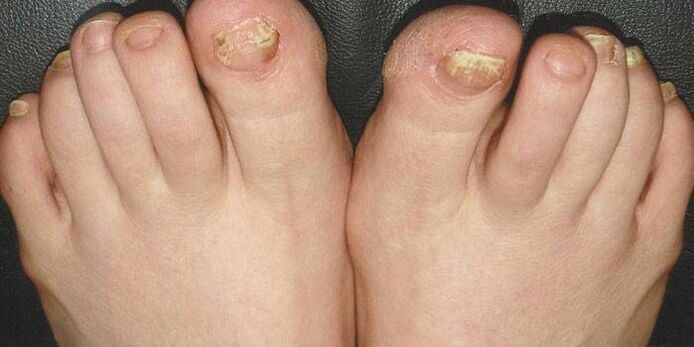
What is nail fungus
Onychomycosis is one of the most common infectious diseases caused by microorganisms in the form of yeast and fungi.Due to its rapid spread, the nail plates begin to yellow, crack, crumble and thicken.As a result of fungal growth, you may lose your nails completely.If left untreated, they will collapse.It is easy to get infected by fungi in public places.This is especially true for saunas, swimming pools, beaches, nail salons and fitness centers.
Where does it come from?
Most cases of infection occur through household items or shoes shared with a sick person.People with excessive sweating on their feet are more prone to nail fungus.More often, foot fungus appears in adults;in children it occurs much less frequently.The causes of the development of the disease are:
- wear tight shoes;
- insufficient hygiene;
- endocrine and nervous system disorders;
- weakened immune system;
- poor blood circulation in the lower extremities;
- frequent visits to places with high humidity;
- chronic infectious diseases;
- foot deformities;
- vascular diseases.
Types of nail fungus
There are several types of fungi that can affect toenails.The main ones are considered the following:
- Musty.People weakened by a long-term illness are more likely to be affected by it.The nail takes on a bluish, yellowish or greenish hue, and may even turn black.Nail fungus can be completely removed in 1-2 months.
- Yeast.The nail becomes irregular, covered in grooves and waves and turns yellow or brown.As the disease progresses, the plaque becomes behind the bed.At the same time, the nail folds become infected and thicken.
- Dermatophytes.They appear as yellow spots on the nail plate.The edges of the nail extend away from the bed.As the condition worsens, the yellowing completely consumes the nail.
Signs
The disease first affects the big toes.Over time, it destroys the nail.When the fungus spreads, other fingers are also affected.The person feels intense itching between them.The skin begins to peel and crack.Also, the pathology is manifested by the following symptoms:
- Change in the color of the nail plate.In its normal state it is translucent and has a pinkish hue.After a fungal infection, the color of the nail changes to yellow, brown or black.
- Thickening of the nail plate.There is an increase in keratinization, becoming thick.In advanced cases, this even interferes with treatment.
- Falling apart.In the absence of adequate therapy, the nail plate is destroyed and completely discolored.
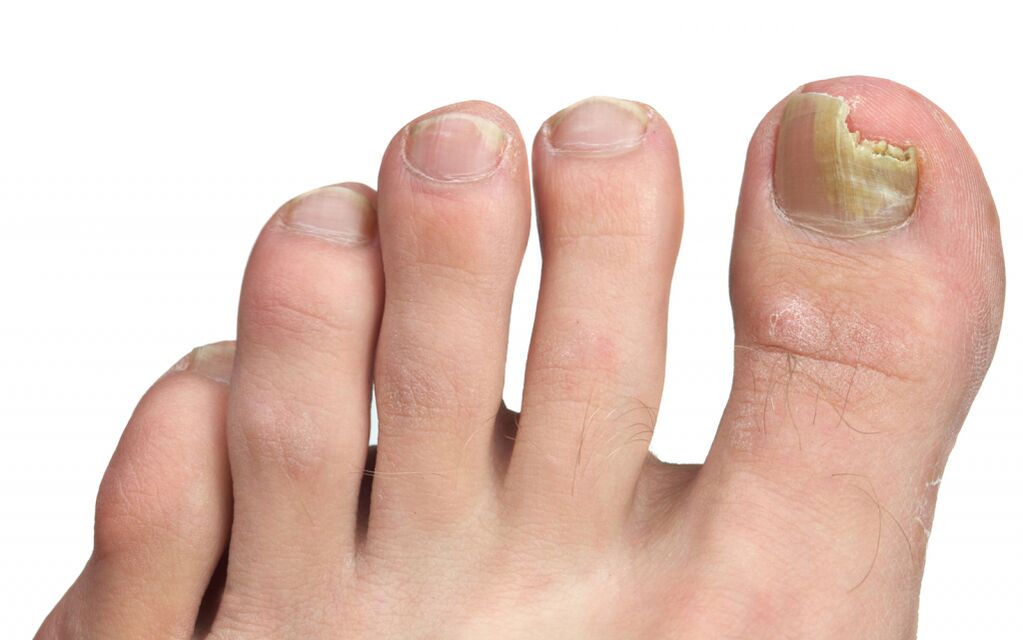
Internships
Signs of fungal infection vary depending on the stage of onychomycosis.The infection occurs quickly and the pathology can be recognized by the following symptoms:
- First stage.It is very difficult to recognize with the naked eye.This can only be done by a doctor who, with multiple magnifications, can see small, clear spots.
- Second stage.The pathology continues to progress.Small stripes and dots turn into whole grooves.This leads to the destruction of the plaque.The shine of the nail plate disappears and begins to turn yellow.
- Third stage.If you ignore the above symptoms, you could lose your nail completely.The surrounding skin will be red and scaly.The nail is completely exfoliated.Against this background, there is an unpleasant odor
How to diagnose a fungus
The external manifestations of the disease only confirm that the toenails are affected by a fungal infection.The cause of the disease can only be determined through laboratory tests.To prescribe adequate therapy, onychomycosis is differentiated from psoriasis, lichen planus, etc.If there are signs, you should consult a mycologist or dermatologist.The diagnostic methods are as follows:
- Microsporia.It is a scraping of the nail plate.To collect the material, the nail is treated with a special substance that destroys keratin.This way, the material becomes easier to study.
- Bacteria research.It involves placing the material in a nutrient medium.The causative agent of the infection is determined by the growth rate, color and shape of the colonies.This study makes it possible to identify the sensitivity of a microorganism to medications.
- DNA diagnosis.This method reveals areas affected only by dermatophytes and Candida fungi.Diagnostics are carried out using special devices, which is why they are expensive.
How to treat nail fungus
Depending on the clinical form of the disease, the size of the affected area and the degree of nail change, the doctor prescribes a comprehensive treatment.Therapy may include:
- ointments, creams, lotions, drops, sprays for disinfecting and treating shoes, which help in the treatment of mild or moderate fungal infections;
- tablets when the disease progresses to a serious stage;
- surgical removal of the nail plate in case of severe or recurrent infection;
- folk remedies, for example, soda, garlic, hydrogen peroxide, birch tar ointments, tea tree oil, celandine tincture, propolis, acetic acid.
In the initial phase
For small lesions, local therapy will help cure onychomycosis.These include peel-off patches, medicated varnishes, creams, gels and ointments.Such medications are effective only in the initial stage of onychomycosis.They are applied directly to the damaged nail and surrounding tissues for a long time.Sometimes it takes about a year for complete recovery.
neglected fungus
If the disease is already advanced, external remedies will be ineffective.It is necessary to use internal medicines.This includes antimycotics in the form of tablets and capsules.They inhibit the development of the pathogen and block its spread.In addition, the tablets have a prolonged effect, thereby reducing the likelihood of reinfection.

How to treat nail fungus
Depending on the stage of the disease, the doctor prescribes certain medications to patients.The main groups of antifungal medications are:
-
medications for systemic use;
- products for topical use.
The last group of medications includes a variety of medications applied directly to the affected nail.The main ones are:
- varnishes;
- sprays;
- solutions;
- cream
Special varnishes
In the initial stages of the disease, antifungal varnishes can be used.They help to soften the nail plate and increase the concentration of the medicinal substance in them.
Ointments and creams
The effectiveness of local medications is due to the direct contact of the medication with the lesion.At the first stage of the disease, only these drugs are prescribed, as tablets have more side effects.
Antifungal tablets
If signs of nail fungus indicate an advanced stage of the disease, the doctor will prescribe more serious antifungal medications in tablet form.
laser therapy
If the nail fungus is at an advanced stage and cannot be treated with medication, more radical methods will be used.One of the effective methods is laser therapy.When exposed to radiation, fungal spores die.Furthermore, the laser does not harm surrounding tissues.Even an advanced stage of onychomycosis can be cured with 3-4 treatment procedures.
Treatment of nail fungus with folk remedies
Ways to treat toenail fungus with folk remedies should be used along with taking medications.This is especially true for the advanced stage of the disease.In this case, just using popular recipes is no use.At the first signs of onychomycosis, you can use vinegar, iodine, kombucha and celandine tincture.
Vinegar
Apple cider vinegar is used to eliminate fungus.It must be mixed with warm water in a 1:1 ratio.You need to soak your feet in this solution for about 15 to 20 minutes.After that, your feet should dry completely.It is recommended to repeat the procedure daily for 2 weeks.During this time, you may notice how a new nail, not damaged by the fungus, begins to grow.
Iodine
Effective treatment of nail fungus is also carried out with the help of iodine.The course of treatment is 3 weeks.Every day it is necessary to treat the affected nail plates with iodine.It is important to constantly remove the tip of the nail that has grown.This remedy for foot fungus receives good reviews.Iodine can also be used in hot baths.To do this, dissolve 10 drops of the product in 0.5 liters of water and immerse your feet in it for 10 minutes.
Kombucha
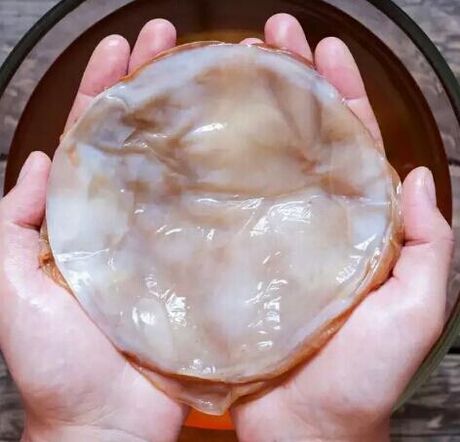
Compresses are made with kombucha.To do this, you must apply a plate of this product to the painful nail, wrapped in cellophane and a bandage.You need to wear socks over it.It is better to carry out the procedure at night, and in the morning rinse your feet in warm water, then remove the affected areas and lubricate them with iodine.Many patients report severe pain, but if you are patient, you can recover quickly from the fungus.
Celandine
Fresh celandine must be passed through a meat grinder and the juice extracted from the resulting pulp through 3-4 layers of gauze.You need to ingest enough herb to make 200 ml of liquid.200 ml of 70% alcohol are added and left to infuse for a whole day.Apply the prepared product to the affected areas after steaming your feet for 10 minutes and letting it dry completely.The course of treatment is at least 10-12 days.Nail plates need to be treated 3-4 times a day.